Godzilla Minus Zero (Japan, 2026)
November 06, 2026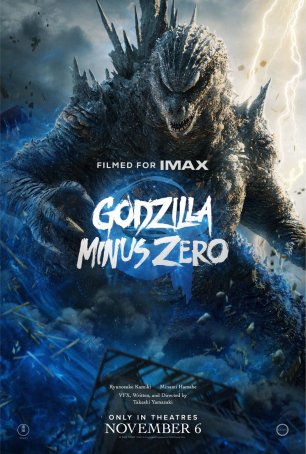
[Note: Some might consider this a spoiler, so here's warning – this review reveals Godzilla's monster-enemy in the film.]
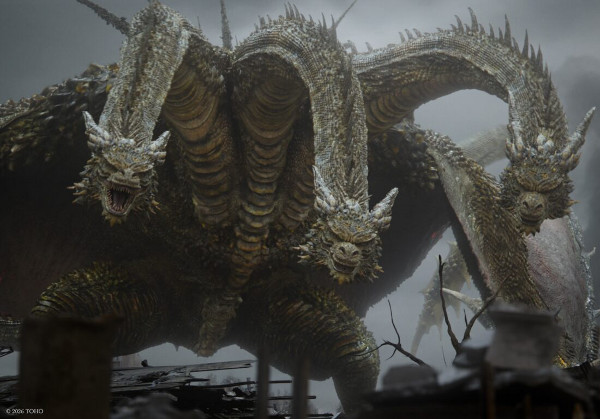
In 2019, Legendary decided that the best way to follow up their version of Godzilla was to bring in King Ghidorah, the Big Green Monster's chief enemy dating all the way back to the 1964 Showa-era film, Ghidorah, the Three-Headed Monster. The same thought apparently occurred to Takashi Yamazaki because, for his sequel to the surprise international hit, Godzilla Minus One, he has resurrected that very same classic adversary.
Both battles (the one in Godzilla: King of the Monsters and the one in Godzilla Minus Zero) are top-notch displays of CGI-fueled spectacle. But, if I were to rank them (which I will now unabashedly do), this 2026 take is considerably better. It's more brutal, generally delivers a more forceful punch, and is two or three times as long, going on for about half an hour across a couple of rounds. If monster-on-monster violence is your thing, Godzilla Minus Zero is the place to get it. And, in this R-rated romp, things get a lot more graphic than anything we have previously seen in a Godzilla movie.
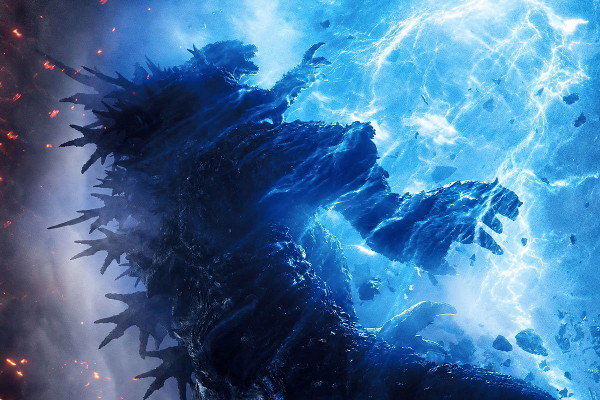 Godzilla Minus Zero is about the best sequel one
could hope for. That is to say, it's a very good movie that doubles down on the
monster action, brings back the same humans, and keeps the overall chronology
moving forward without getting too ridiculous. It lacks the same unique quality
that Godzilla Minus One had, because that film seemingly came out of
nowhere and brought back an updated version of the real Godzilla (rather than
the various imposters who have been stomping around in U.S.-funded blockbusters
since Devlin and Emmerich unveiled their misfire in 1998).
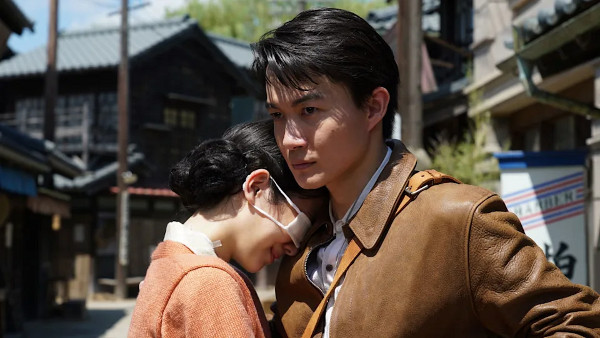
The story picks up a couple of years after the events of Godzilla Minus One. It's 1949 and Japan is still in recovery mode, picking up the pieces of both World War II and Godzilla's attack. The monster is thought to be dead. The two principals of the first film, Koichi Shikishima (Ryunosuke Kamiki) and Noriko (Minami Hamabe), are now married and living a quiet life with their adopted daughter, Akiko (played by Sae Nagatani, who was a toddler when she last portrayed the character—Takashi Yamazaki did not recast). But their peace, like that of Japan, is about to receive a jolt with the arrival of an extraterrestrial flying dragon kaiju that is dubbed Ghidorah.
 After a devastating strike on the city of Matsumoto, Ghidorah
becomes target #1 on the agenda of the government's Large-Scale Disaster
Response Bureau. Headed by Kenji Noda (Hidetaka Yoshioka), who is backed by
forward-thinking meteorologist Makoto Aoyama (Masami Nagasawa) and
psychologically scarred biologist Kanji Murakami (Min Tanaka), the Bureau leaps
into action, joined by Shikishima. Their efforts, however, prove to be
counterproductive. Their attacks on Ghidorah only strengthen him, causing him
to evolve (and sprout a couple more heads to match the classic interpretation).
Meanwhile, a fully regenerated Godzilla chooses this moment to announce his
return, setting up the inevitable showdown.
Is the storyline a little unlikely? Yeah, but that's par for the course, and it's not nearly as outrageous as some of the later classic/Showa-era titles or the recent King Kong team-ups. The period setting helps to ground things, as do the attempts to give the humans agency. I'm not going to argue that Shikishima and Noriko are fully three-dimensional characters, but we are no less invested in them here than in the previous film, and there's real emotion during their scenes with Akiko. Surrounded by war orphans, she fears abandonment and, although she is never physically in danger, this adds another dimension to the proceedings.
I don't know how much Godzilla Minus Zero cost. Yamazaki shocked the world three years ago when he announced that Godzilla Minus One had a budget between $10 million and $15 million. Although this movie likely cost more, it's probably only a fraction of what Hollywood would have spent on a similar production. It's visually dynamic, full of dramatic big-screen moments and top-quality effects work. Composer Naoki Sato incorporates re-orchestrated excerpts from Akira Ifukube's 1954 themes to herald Godzilla's major appearances and to underscore the climactic battle.
 Thematically, Godzilla Minus Zero echoes the same
cautions as its predecessors about the dangers of technology and the attempts
to corral the forces of nature. There's a parallel here to the Alien
universe, in which the company Weyland-Yutani pursued a goal of capturing the
xenomorphs, believing that they could use them in war. Here, there are
indications that American forces are interested in weaponizing Godzilla. This
could prove to be the direction that a third movie in Yamazaki's universe
takes.
Given my disappointment with the Legendary kaiju films, this series has provided a refreshing and delightful counterpoint. Like Godzilla Minus One, Godzilla Minus Zero feels like a real Godzilla film, not some overproduced hybrid. If I have one minor complaint, it's that the first hour is a little more protracted than is necessary, with perhaps too much time spent on human interaction that doesn't add a lot. Overall, however, this is monster movie-making at its best and proof that Yamazaki's vision of Godzilla didn't amount to a one-hit wonder.
Godzilla Minus Zero (Japan, 2026)
Cast: Ryunosuke Kamiki, Minami Hamabe, Min Tanaka, Hidetaka Yoshioka, Masami Nagasawa, Sae Nagatani
Screenplay: Takashi Yamazaki
Cinematography: Kozo Shibasaki
Music: Naoki Sato
U.S. Distributor: GKIDS
U.S. Release Date: 2026-11-06
MPAA Rating: "R" (Violent content/bloody images)
Genre: Sci-Fi/Action
Subtitles: Japanese with subtitles
Theatrical Aspect Ratio: 2.39:1
- (There are no more better movies of this genre)
- Your Name (2017)
- Godzilla Minus One (2023)
- (There are no more better movies of Ryunosuke Kamiki)
- (There are no more worst movies of Ryunosuke Kamiki)
- Godzilla Minus One (2023)
- (There are no more better movies of Minami Hamabe)
- (There are no more worst movies of Minami Hamabe)
- (There are no more better movies of Min Tanaka)
- (There are no more worst movies of Min Tanaka)
Comments