Paper Tiger (United States, 2026)
November 24, 2026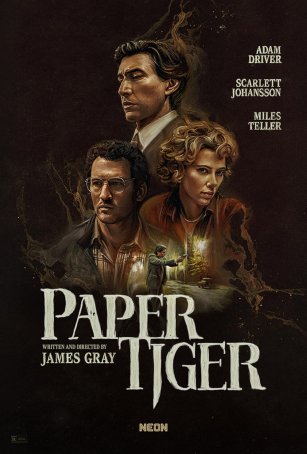
Serious, grounded crime thrillers are rare in the current theatrical landscape, making James Gray's Paper Tiger a welcome arrival. Returning to the East Coast milieu of his earlier films like Little Odessa and We Own the Night, Gray prioritizes character interaction and accumulating tension over spectacle, gore, and sensationalism. At its best, the film recalls early Martin Scorsese in its focus on ordinary people trapped by their own bad decisions. The character work is solid, and the 1986 period detail is convincing without calling attention to itself. The narrative structure is not airtight, however. Once the trajectory of the criminal enterprise is established, the outcome seems predetermined, which limits the suspense. There is also an issue with a subplot involving a family medical crisis; its resolution feels contrived and clashes with the credible behavior built earlier in the film.
Gray's screenplay works within a familiar crime-drama framework: an overconfident operator misreads the people he is dealing with and gets in over his head. Once the situation deteriorates, sacrifices must be made to contain the collateral damage. What elevates the material is Gray's refusal to heighten the stakes with genre clichés. He never turns his protagonists into heroes, nor does he pad the runtime with unnecessary action sequences. Violence, when it erupts, is brief, messy, and consequential.
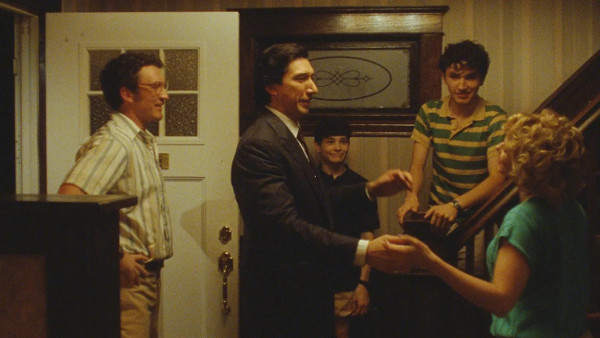
The opening act efficiently establishes the dynamics of the suburban Pearl household: father Irwin (Miles Teller), mother Hester (Scarlett Johansson), and their teenage sons, Scott (Gavin Goudey) and Ben (Roman Engel). The family's routine is disrupted by the arrival of Irwin's older brother, Gary (Adam Driver). A former police officer with a reputation for staying clean despite years of exposure to corruption, Gary is warmly welcomed by all of them. He approaches Irwin with a business proposition: the two of them can form a consulting firm to help a group of Russian nationals navigate New York's environmental regulations. Eager to prove himself alongside the brother he idolizes, Irwin agrees. When he naively shows up at the wrong place at the wrong time, however, it becomes clear that the Russians have no interest in compliance. What began as a lucrative opportunity turns into a threat to the Pearls.
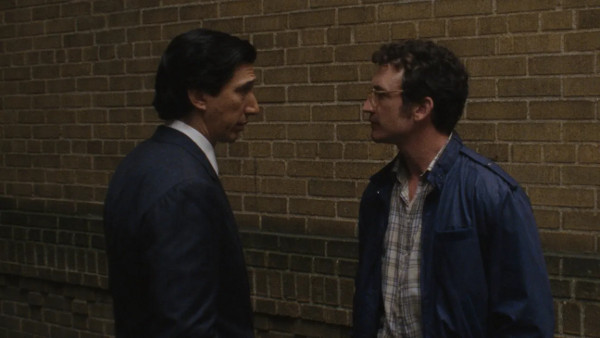 Even when the broader plot follows a predictable path, Gray
constructs several tense set pieces that keep the momentum intact. The first
occurs when Irwin brings his sons on what he assumes is a routine fact-finding
trip, only for the encounter to turn hostile; the presence of the boys sharpens
the stakes and exposes Irwin's lack of preparation. The second is a
confrontation in a cornfield, where Gray relies on point-of-view shots to
restrict the audience's perspective. By limiting what we can see, he captures
the character's disorientation and heightens the urgency of the sequence
without resorting to frantic editing.
The three leads anchor the film with well-calibrated performances. Adam Driver gives Gary an easy charm and surface confidence that reveal a deeper recklessness as the plot tightens. Miles Teller plays Irwin as a study in anxiety and misplaced eagerness; his underlying timidity is a departure from Teller's more abrasive screen personas. Scarlett Johansson steps away from her usual roles to play a quiet suburban housewife. Her approach to Hester is understated, grounding the domestic scenes and making the threat to her household feel tangible.
 Because the character work is consistent through the first
two acts, the film's third-act stumble is noticeable. The weakest element of
the screenplay involves a character's health crisis, which feels grafted onto
the main plot rather than integrated into it. That miscalculation affects the
conclusion, leaving it formless and abrupt, as if Paper Tiger needed
another few beats to process the fallout before cutting to the credits.
Despite those structural flaws, Paper Tiger succeeds more often than it fails. It works both as a restrained crime drama and as an unsentimental portrait of fraternal loyalty tested by poor judgment. Gray's commitment to realism, paired with strong performances from Driver, Teller, and Johansson, keeps the film engaging. The anticlimactic, unfinished quality of the resolution prevents Paper Tiger from reaching the level of Gray's best work, yet it remains a solid, adult-oriented thriller in a marketplace that rarely produces them.
Paper Tiger (United States, 2026)
Cast: Adam Driver, Scarlett Johansson, Miles Teller, Gavin Goudey, Roman Engel, Victor Ptak
Screenplay: James Gray
Cinematography: Joaquín Baca-Asay
Music: Christopher Spelman
U.S. Distributor: NEON
U.S. Release Date: 2026-11-20
MPAA Rating: "R" (Language and some violence)
Genre: Thriller
Subtitles: none
Theatrical Aspect Ratio: 2.39:1
Comments