Supergirl (United States, 2026)
June 26, 2026
It's possible to acknowledge what a movie is trying to do without wholeheartedly embracing how it goes about the task. That's the issue with Craig Gillespie's Supergirl: solid premise, mediocre execution. Despite an intriguing arc for Milly Alcock's title character, the film repeatedly stumbles, losing momentum through a series of self-inflicted wounds. Two of these stand out: an unnecessary sidekick whose primary purpose is to facilitate exposition and provide a shortcut to an emotional catharsis, and a glaringly weak villain. There are other nits to pick, but those are the two primary offenders, and their presence severely diminishes the film.
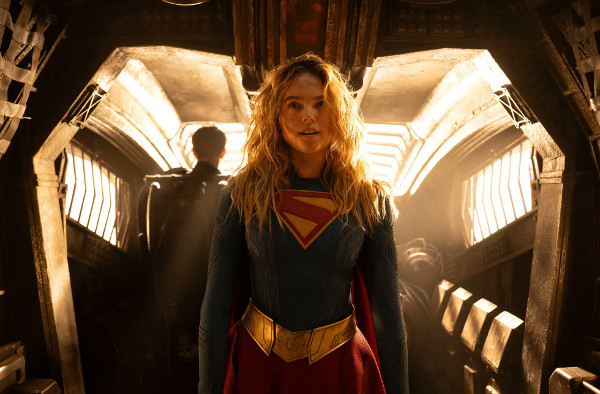
There are times, however, when it almost works. Alcock is excellent here; her character is a powder keg of self-destructive impulses, guilt, and conscience. Her past haunts her, and she is constantly on the run from her future. The way the film allows her to binge-party her way into oblivion is quite clever (she visits planets that orbit red suns, neutralizing the powers she possesses under a yellow sun), and Alcock effectively conveys the underlying pain. Furthermore, I appreciate that this movie isn't about saving a world; it's about saving a soul. It's a shame that thematic focus gets muddled by a "little sister" intrusion in the form of a newly orphaned girl named Ruthye (Eve Ridley).
 Ruthye is one of those characters who exists solely to be
repeatedly thrust into danger, thereby forcing Kara to save her. This setup
allows for gratuitous action scenes and the forced emergence of a conscience.
Emotional manipulation is part and parcel of cinema, but there's a vast
difference between a skillful tug on the heartstrings and a ham-fisted
approach, and this leans heavily toward the latter. Ruthye never feels like a
genuine person, which considerably curtails her effectiveness. She isn't quite as
annoying as Kara's super-dog, Krypto, but at least the canine is only around
for a little while.
Ruthye is one of those characters who exists solely to be
repeatedly thrust into danger, thereby forcing Kara to save her. This setup
allows for gratuitous action scenes and the forced emergence of a conscience.
Emotional manipulation is part and parcel of cinema, but there's a vast
difference between a skillful tug on the heartstrings and a ham-fisted
approach, and this leans heavily toward the latter. Ruthye never feels like a
genuine person, which considerably curtails her effectiveness. She isn't quite as
annoying as Kara's super-dog, Krypto, but at least the canine is only around
for a little while.
The narrative revolves around Kara's planet-hopping quest to locate the antidote for the poisonous dart that downed Krypto. The dog has three days to live, meaning that is exactly how long she has to track down the bandit warlord Krem (Matthias Schoenaerts), who possesses the cure. Her journey brings her into contact with both Ruthye, who is seeking revenge against Krem, and the dreaded Lobo (Jason Momoa)—a bounty hunter who, amusingly enough, bears a passing resemblance to Aquaman.
 As bad guys go, Krem is bottom-of-the-barrel fare. Aside
from being a generic sadist, he isn't especially impressive in terms of either
motivation or overall villainy. He lacks charisma and menace, feeling more like
a street-level thug Batman might face. Consequently, Kara (at least once she is
back under a yellow sun) should be able to wipe the floor with him. His
scheme—which involves the trafficking of young women for breeding purposes—is
undeniably vile. However, the film is forced to dance around this plot point,
because delving any deeper into such grim subject matter would swiftly push the
PG-13 rating into R-rated territory.
As bad guys go, Krem is bottom-of-the-barrel fare. Aside
from being a generic sadist, he isn't especially impressive in terms of either
motivation or overall villainy. He lacks charisma and menace, feeling more like
a street-level thug Batman might face. Consequently, Kara (at least once she is
back under a yellow sun) should be able to wipe the floor with him. His
scheme—which involves the trafficking of young women for breeding purposes—is
undeniably vile. However, the film is forced to dance around this plot point,
because delving any deeper into such grim subject matter would swiftly push the
PG-13 rating into R-rated territory.
While Gillespie has made his share of large-budget features, he has never helmed one heavily reliant on massive action set-pieces, and his inexperience shows. Even though the fights feature some humorous beats, there is a distinct lack of tension and suspense. The brawls come across as rote—included largely because they are expected rather than strictly necessary. Ironically, the moments when Kara faces true, life-threatening danger occur not during these sprawling melees, but when she finds herself caught in the kind of elaborate traps that so often ensnare Superman.
 Speaking of the Man of Steel, the current iteration of
Superman (played by David Corenswet) is on hand to welcome his cousin into the
new DC Universe. While this isn't inherently a mistake, the way he is
shoehorned into the script is problematic. With a character this significant,
there are only two sensible ways to incorporate him: as a brief cameo or with a
legitimate, plot-driven role. Gillespie and screenwriter Ana Nogueira opt for an
unfortunate middle ground. Superman repeatedly pops up with nothing to do
beyond reminding the viewer that he exists. (There also seems to be a slight
disconnect between aspects of Kara's origin story and the "twist" to
Superman's lore revealed in his 2025 solo film.)
Speaking of the Man of Steel, the current iteration of
Superman (played by David Corenswet) is on hand to welcome his cousin into the
new DC Universe. While this isn't inherently a mistake, the way he is
shoehorned into the script is problematic. With a character this significant,
there are only two sensible ways to incorporate him: as a brief cameo or with a
legitimate, plot-driven role. Gillespie and screenwriter Ana Nogueira opt for an
unfortunate middle ground. Superman repeatedly pops up with nothing to do
beyond reminding the viewer that he exists. (There also seems to be a slight
disconnect between aspects of Kara's origin story and the "twist" to
Superman's lore revealed in his 2025 solo film.)
Thus far, James Gunn's stewardship of DC has yet to bear the hoped-for fruit. His Superman was middling, and Supergirl lands closer to a misfire than a hit. Both films ultimately feel frustrating—as if they are afraid of doing anything truly edgy for fear of deviating from a prescribed tone. The underlying concept of Supergirl is strong, but the filmmakers insist on neutering its darker elements in service of a catharsis that feels only half-earned. Fans can at least be thankful that it surpasses the awful 1984 Helen Slater film (which I described as "supremely stupid and natteringly nonsensical") and avoids strictly following the Standard Order Comic Book Movie Template (TM). However, those are incredibly low bars to clear. Beyond such minor victories, Supergirl simply doesn't do enough that is interesting or fresh to make it a memorable motion picture.
Supergirl (United States, 2026)
Cast: Milly Alcock, Matthias Schoenaerts, Eve Ridley, Jason Momoa, David Corenswet
Screenplay: Ana Nogueira
Cinematography: Rob Hardy
Music: Claudia Sarne
U.S. Distributor: Warner Brothers
U.S. Release Date: 2026-06-26
MPAA Rating: "PG-13" (Sequences of strong violence, action, language, and smoking)
Genre: Action/Sci-Fi
Subtitles: none
Theatrical Aspect Ratio: 2.39:1
- (There are no more better movies of this genre)
- (There are no more better movies of this genre)
- (There are no more better movies of Milly Alcock)
- (There are no more worst movies of Milly Alcock)
- Amsterdam (2022)
- (There are no more worst movies of Matthias Schoenaerts)
- (There are no more better movies of Eve Ridley)
- (There are no more worst movies of Eve Ridley)
Comments