Disclosure Day (United States, 2026)
June 12, 2026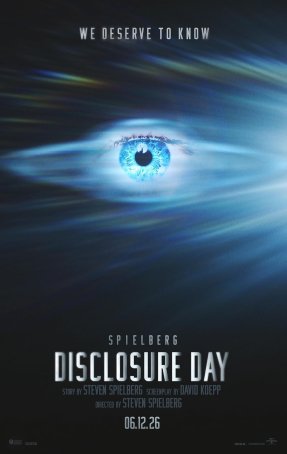
Steven Spielberg loves his aliens. Although he did make them the villains in War of the Worlds, his view toward extraterrestrial life has generally been benign, whether it's Close Encounters of the Third Kind, E.T., or Disclosure Day. The legendary director's valentine to ufology, Disclosure Day is the weakest of the three films, due in large part to a scattershot screenplay from David Koepp that is rife with plot holes and incomplete character arcs. Nevertheless, Spielberg finds a measure of his old magic during the climax and denouement, which hearken back to Close Encounters while finding their own footing.
It's fair to wonder whether Disclosure Day's sometimes maddening narrative issues are the result of editing decisions. Although the movie still clocks in at a respectable 145 minutes, my guess is that the original cut may have been much longer, and attempts to slim down the theatrical version may have resulted in decisions that hampered overall coherence. Two characters in particular—Colin Firth's Noah Scanlon and Colman Domingo's Hugo Wakefield—appear to have retained only a portion of their original arcs. A conversation between them comes across like an incomplete exposition dump.
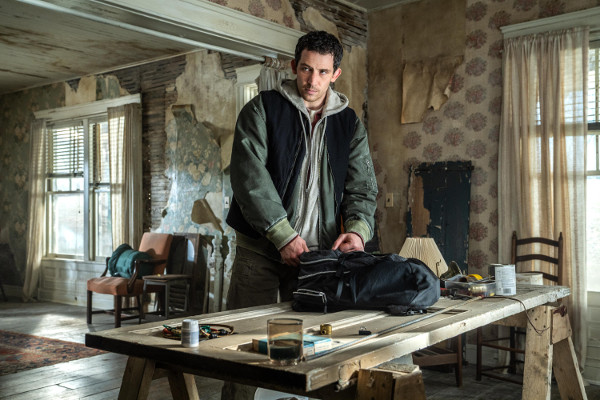 The movie opens midway through a story whose beginning we
only discover through dialogue. It's an intriguing way to start things because
it demands that the viewer pay attention to keep from becoming completely lost.
Initially, we learn that Daniel Kellner (Josh O'Connor) is in possession of a
dangerous alien artifact that he's using to bargain for the return of his
girlfriend, Jane (Eve Hewson), who has been kidnapped by the amoral Noah. Noah
is the head of a private corporation working with the U.S. Defense Department
to reverse-engineer extraterrestrial technology, and Daniel represents a threat
that must be eliminated. Daniel is soon on the run with Jane, taking orders
from Hugo.
The movie opens midway through a story whose beginning we
only discover through dialogue. It's an intriguing way to start things because
it demands that the viewer pay attention to keep from becoming completely lost.
Initially, we learn that Daniel Kellner (Josh O'Connor) is in possession of a
dangerous alien artifact that he's using to bargain for the return of his
girlfriend, Jane (Eve Hewson), who has been kidnapped by the amoral Noah. Noah
is the head of a private corporation working with the U.S. Defense Department
to reverse-engineer extraterrestrial technology, and Daniel represents a threat
that must be eliminated. Daniel is soon on the run with Jane, taking orders
from Hugo.
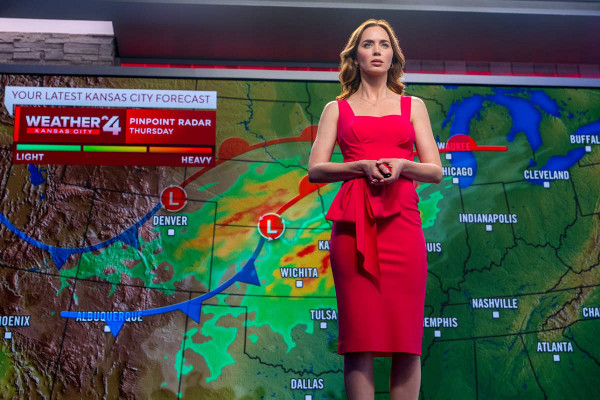
The second prong of the story relates to Kansas City weathergirl Margaret Fairchild (Emily Blunt), who experiences a change in consciousness when a cardinal flies through a window into her apartment. She can suddenly read minds and distort perceptions. One day, while on the air, she begins to speak gibberish. This is actually an alien language—and the only one who can translate it is Daniel, who realizes this when he watches a YouTube clip of her viral weathercast. Soon, Margaret is also on the run from Noah's goons, drawn by an unknown compulsion to find Daniel.
 One of the film's weaknesses is the seemingly inordinate
amount of time it spends with the characters being chased. The intention is to
impart excitement, but it occasionally feels manufactured. The payoff in which
the connection between Margaret and Daniel is revealed is also underwhelming.
One can understand what Spielberg and Koepp are striving for here, but they
don't quite get there. Instead of a spiritual or mystical moment, it feels
almost hokey, and the use of animal imagery is not well-integrated.
One of the film's weaknesses is the seemingly inordinate
amount of time it spends with the characters being chased. The intention is to
impart excitement, but it occasionally feels manufactured. The payoff in which
the connection between Margaret and Daniel is revealed is also underwhelming.
One can understand what Spielberg and Koepp are striving for here, but they
don't quite get there. Instead of a spiritual or mystical moment, it feels
almost hokey, and the use of animal imagery is not well-integrated.
The actual Disclosure Day aspect, which comprises the movie's final act, is handled in a mostly compelling fashion (although things with Noah are resolved too cleanly). This concept is clearly something that greatly interests Spielberg, and he dramatizes it effectively. Another intriguing element is the philosophical framework he posits for how certain religions (in this case, Catholicism) might reconcile alien life with traditional Biblical teachings.
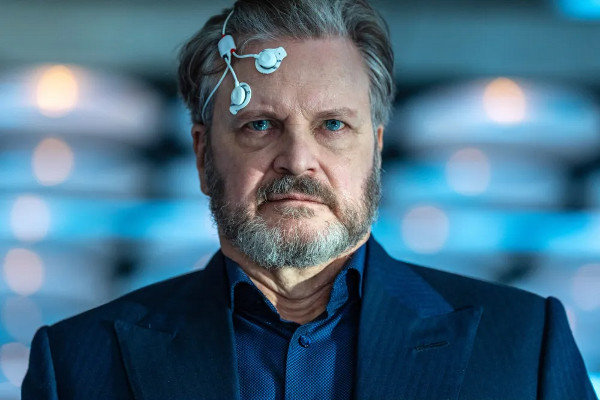
The cast is an eclectic mix, with the three main leads—Emily Blunt, Josh O'Connor, and Colin Firth—hailing from the U.K. (although only Firth is allowed to retain his accent). Of the top five stars, only Colman Domingo is American (Eve Hewson is Irish). Domingo's role is the showiest, and he is the most charismatic. Firth is singularly effective as the villain, a part he rarely plays. The two leads, Blunt and O'Connor, are the most subdued of the performers.
 The connective tissue between Disclosure Day and Close
Encounters of the Third Kind is strong. Both films share thematic elements
and ideas about extraterrestrial visitations, although the latter film is
ultimately more optimistic. As Close Encounters follows the journeys of
Roy Neary (Richard Dreyfuss) and Jillian Guiler (Melinda Dillon) to a final
meeting with aliens, so Disclosure Day does something similar with
Margaret and Daniel. As Close Encounters explores Claude Lacombe's
(François Truffaut) obsessive pursuit of contact, Disclosure Day offers
Hugo's similar goals. The tagline for Close Encounters is "We are
not alone." A character in Disclosure Day speaks this very line.
The only thing missing—and it probably would have been too precious to
include—is John Williams echoing the famous five-note tune from his 1977 score.
The connective tissue between Disclosure Day and Close
Encounters of the Third Kind is strong. Both films share thematic elements
and ideas about extraterrestrial visitations, although the latter film is
ultimately more optimistic. As Close Encounters follows the journeys of
Roy Neary (Richard Dreyfuss) and Jillian Guiler (Melinda Dillon) to a final
meeting with aliens, so Disclosure Day does something similar with
Margaret and Daniel. As Close Encounters explores Claude Lacombe's
(François Truffaut) obsessive pursuit of contact, Disclosure Day offers
Hugo's similar goals. The tagline for Close Encounters is "We are
not alone." A character in Disclosure Day speaks this very line.
The only thing missing—and it probably would have been too precious to
include—is John Williams echoing the famous five-note tune from his 1977 score.
Ultimately, Disclosure Day won't go down among Spielberg's greatest or best-remembered films, although ufologists may disagree. There are just too many basic flaws. However, I appreciate its scope and ambition, and it does enough to represent solid, blockbuster-level entertainment. I can't help but wonder whether, like James Cameron's The Abyss and Ridley Scott's Kingdom of Heaven—two ambitious films stifled and damaged by the realities of a commercial release—a better, longer version of Disclosure Day might eventually surface. Until then, this is what we have, and it works on its own terms, however imperfectly.
Disclosure Day (United States, 2026)
Cast: Emily Blunt, Josh O'Connor, Colin Firth, Eve Hewson, Colman Domingo
Screenplay: David Koepp
Cinematography: Janusz Kamiński
Music: John Williams
U.S. Distributor: Universal Pictures
U.S. Release Date: 2026-06-12
MPAA Rating: "PG-13" (Action/violence, some bloody images, and strong language)
Genre: Science Fiction/Thriller
Subtitles: none
Theatrical Aspect Ratio: 2.39:1
- Wake Up Dead Man: A Knives Out Mystery (2025)
- (There are no more better movies of Josh O'Connor)
- (There are no more worst movies of Josh O'Connor)
Comments