Clayface (United States, 2026)
October 23, 2026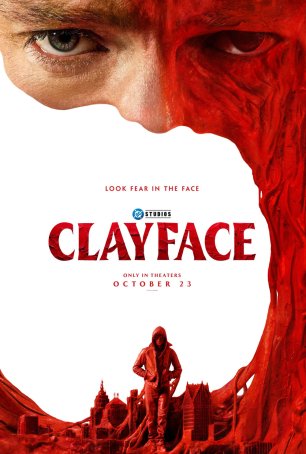
When James Gunn took the helm of DC Studios, two aspects of his "mission statement" were to expand comic book adaptations into genres beyond the traditional superhero-thriller, and to explore "lesser known" properties. Clayface represents an opportunity to fulfill both of these objectives and, although it certainly doesn't suffer from generic comic book-itis, it illustrates the pitfalls of this approach. Using body horror to tell the origin story of a Batman villain could be seen as a stroke of genius, assuming it's done right. Unfortunately, it isn't, or at least not as well as it could have been. With a meandering screenplay, horrendous dialogue, and middling direction, the movie prompts the inevitable question: "What would David Cronenberg have done with this?" The answer is: "Something better than James Watkins did."
Since the comic books never provided a definitive Clayface, screenwriter Mike Flanagan was able to cherry-pick elements of the character's backstory from across the 86 years of his existence. The film is careful to limit ties to Gunn's DC Universe. Excepting the location – most of the action transpires in a distressingly generic Gotham City – the slate has been scrubbed clean. There are no mentions of Batman, Bruce Wayne, or any other famous citizens.
The story introduces us to rising star Matt Hagen (Tom Rhys Harries) on the night he is nominated for an Oscar. From this height, the plummet is drastic. He makes the mistake of sleeping with starlet Mia Torrez (Joana Ribeiro), who happens to be the girlfriend of mobster Markos Szabo (David Dencik). The subsequent confrontation results in Matt suffering disfiguring facial wounds that not even the best plastic surgeons can repair. He soon finds himself dropped by his agent (Nancy Carroll), shunned by the entertainment community, and broke after his manager, Frank Fitzpatrick (Eddie Marsan), cleans him out. Desperate, he turns to disgraced scientist Dr. Caitlyn Corr (Naomi Ackie), whose revolutionary (but untried) nanobot technology offers him a lifeline. Although the procedure is initially successful, Matt soon discovers that the facial reconstruction is unstable. When he overdoses on the nanobot serum, the results are unpredictable, giving him the ability to assume the shape of other people, seemingly at will. However, this capability also triggers homicidal tendencies that quickly manifest as he tracks down his enemies one by one.
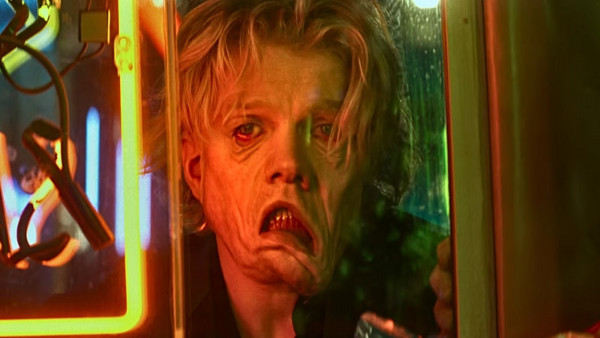 Although director James Watkins has had some success with
conventional horror (helming such titles as Speak No Evil and The Woman in Black), body horror is a different beast. While it's probably
unreasonable to expect him to match Cronenberg, the film's "flinch"
scale remains low. Only one scene delivers a legitimate jolt – when Matt
stumbles into an airplane lavatory during a bout of turbulence and has to use a
pair of scissors to cut through tissue growing over his eyes. And, when it
comes to executing the confusion and paranoia that can result from
doppelgängers, we're not exactly in John Carpenter's The Thing
territory. Opportunities are present; they simply aren't seized.
I expected more from a Mike Flanagan screenplay (Flanagan's The Life of Chuck was one of the best films of 2025), though the original script reportedly underwent significant rewrites after Watkins came on board. Regardless, one of the film's biggest flaws is the atrocious dialogue. This is one of those movies where people speak exclusively in clichés and exposition. There's no humanity or reality in any verbal interplay. Perhaps the worst offender is Max Minghella's Detective John Borrelli, although it's difficult to tell how much of that is the writing and how much is Minghella's stiff performance.
 Even though Clayface tries to make Matt a semi-tragic
figure, he mainly comes across as a narcissistic asshole. The biggest miss in
terms of character complexity, however, is Caitlyn. The story doesn't seem to
know what to do with her. Conceptually, she's far more interesting than Matt
with her Dr. Frankenstein parallels, but the film never commits to tilting her
fully in the amoral, mad scientist direction, only occasionally hinting at that
trait. Naomi Ackie's performance is fine, but there's a sense that she had a
lot more to offer – the screenplay simply holds her back by underusing the
character.
Clayface offers a few pleasures. The aforementioned airplane scene is, without doubt, a high point. It's also fun to watch Matt track down and avenge himself upon the various people who have wronged him. But those are basic staples of revenge thrillers, and nothing in this one is executed with particular skill or inventiveness. Matt's shapeshifting abilities are underutilized – or at least Watkins' ability to generate suspense from them is. Ultimately, Clayface feels a lot like Sony's attempts to build movies around Spider-Man villains: partially formed and largely unnecessary.
Clayface (United States, 2026)
Cast: Tom Rhys Harries, Naomi Ackie, Max Minghella, Eddie Marsan, David Dencik, Joana Ribeiro
Screenplay: Mike Flanagan
Cinematography: Rob Hardy
Music: Volker Bertelmann
U.S. Distributor: Warner Brothers
U.S. Release Date: 2026-10-23
MPAA Rating: "R" (Strong bloody violence, gore, language, some nudity and brief drug use)
Genre: Horror/Thriller
Subtitles: none
Theatrical Aspect Ratio: 2.76:1
- (There are no more better movies of Tom Rhys Harries)
- (There are no more worst movies of Tom Rhys Harries)
- Blink Twice (2024)
- I Love Boosters (2026)
- (There are no more better movies of Naomi Ackie)
- Ides of March, The (2011)
- Art School Confidential (2006)
- (There are no more better movies of Max Minghella)
Comments