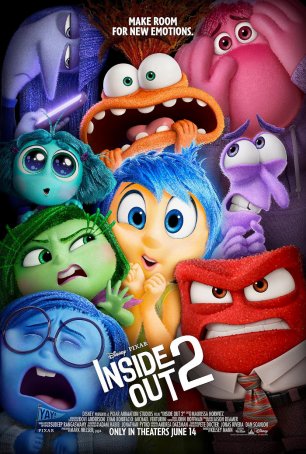
U.S. Release Date: 2024-06-14
MPAA Rating: "PG"
Genre: Animation
Director: Kelsey Mann
Cast: Kensington Tallman, Diane Lane, Lilimar, Paul Walter Hauser, Adele Exarchopoulos, Ayo Edebiri, Phyllis Smith, Lewis Black, Tony Hale, Liza Lapira, Maya Hawke, Amy Poehler, Kyle MacLachlan
This is solid, middle-of-the-road Pixar, not quite as good as some of their better sequels but superior to the "Cars" follow-ups.
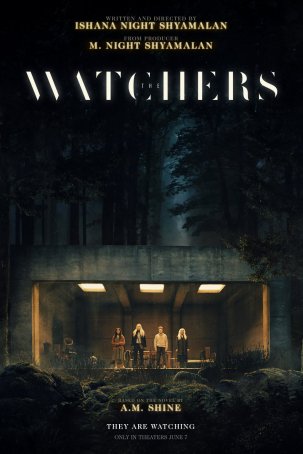
U.S. Release Date: 2024-06-07
MPAA Rating: "PG-13" (Violence, Disturbing Images)
Genre: Horror
Director: Ishana Night Shyamalan
Cast: Dakota Fanning, Georgina Campbell, Olwen Fouere, ...
Ironically for something titled "The Watchers," this production lacks the basic quality of watchability.
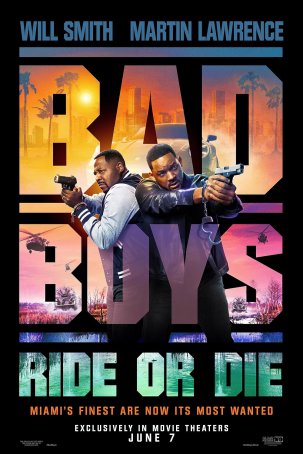
U.S. Release Date: 2024-06-07
MPAA Rating: "R" (Violence, Profanity, Brief Nudity, Sexual Content)
Genre: Action/Comedy
Director: Adil & Billall
Cast: Will Smith, Martin Lawrence, Vanessa Hudgens, ...
At best, it can be considered as an adequate thriller/comedy chock full of generic action and stale humor.
Latest ReelThoughts
- Jan 3rd 2024 | Rewinding 2023 - The Year in Film
- Jan 4th 2023 | Rewinding 2022 - The Year in Review (Including Top 10 List)
- Dec 31st 2021 | Rewinding 2021: The Year in Film (Including the Top 10)
- Jan 16th 2021 | Rewinding 2020: The Year in Movies (The Top 10)
- Feb 2nd 2020 | Berardinelli's Ballot: The 2020 Oscars
- Dec 31st 2019 | Rewinding 2019: The Year in Review
- Dec 26th 2019 | A Look Back at the 2010s
Latest VideoViews
-
 Jun 13th 2024 | Bride of Frankenstein, The
-
Jun 6th 2024 | Beverly Hills Cop
- May 31st 2024 | Fame
- May 14th 2024 | Feardotcom
- May 10th 2024 | Staying Alive
- May 3rd 2024 | Howard the Duck
- Apr 25th 2024 | That's Entertainment

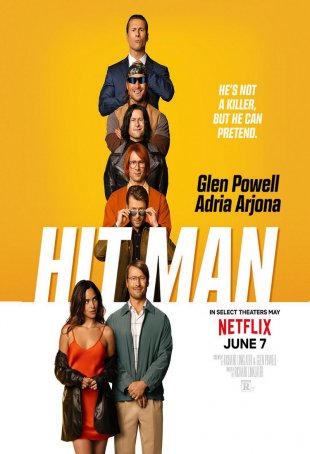
U.S. Release Date: 2024-06-07
MPAA Rating: "R" (Profanity, Violence)
Genre: Thriller
Director: Richard Linklater
Cast: Glen Powell, Adria Arjona, Austin Amelio, Evan Holtzman
Smartly written, melding screwball comedy elements with rom-com beats against a Hitchcockian thriller backdrop. The small twists have big payoffs.

U.S. Release Date: 2024-05-24
MPAA Rating: "R" (Violence)
Genre: Science Fiction/Action
Director: George Miller
Cast: Anya Taylor-Joy, Chris Hemsworth, Alyla Browne, Tom Burke, Lachy Hulme, John Howard, Angus Sampson, Nathan Jones, Josh Helman
While all the "Mad Max" movies have relied more on stunts and action than narrative cohesiveness, "Furiosa" takes this to a new level.

U.S. Release Date: 2024-05-17
MPAA Rating: "R" (Profanity, Drugs, Sexual Content, Nudity)
Genre: Drama
Director: Sam Taylor-Johnson
Cast: Marisa Abela, Jack O’Connell, Eddie Marsan, Lesley Manville, Juliet Cowan, Sam Buchanan
I could learn a lot more about Winehouse by listening to her music than by watching this by-the-numbers sketch of her adult life.

U.S. Home Release Date: -
MPAA Rating: "R" (Violence, Gore, Profanity, Sexual Content)
Genre: Horror
Director: Renny Harlin
Cast: Madelaine Petsch, Froy Gutierrez, Matus Lajcak, Olivia Kreutzova, Letizia Fabbri
Although there are stretches when the movie generates tension, the seeming inevitability of the endgame limits its power.
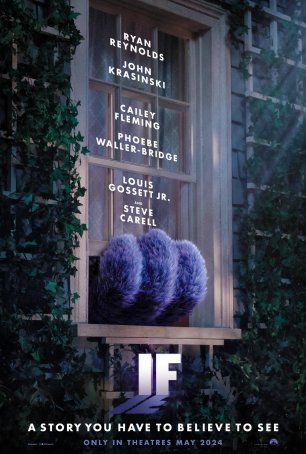
U.S. Release Date: 2024-05-17
MPAA Rating: "PG"
Genre: Fantasy
Director: John Krasinski
Cast: Cailey Fleming, Ryan Reynolds, John Krasinski, Fiona Shaw, Steve Carell, Alan Kim
The narrative is all over the place. Character motivation is confusing. And, worst of all, the story simply is not interesting.

U.S. Release Date: 2024-05-10
MPAA Rating: "PG-13" (Violence, Profanity)
Genre: Science Fiction/Adventure
Director: Wes Ball
Cast: Owen Teague, Freya Allan, Kevin Durand, Peter Macon, Lydia Peckham, Travis Jeffery, William H. Macy
As we travel with the apes through this wreckage of a human-designed world that is being reclaimed by nature, there is a sense of awe at how real everything seems.
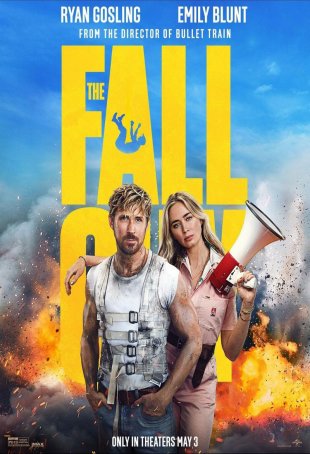
U.S. Release Date: 2024-05-03
MPAA Rating: "PG-13" (Violence, Profanity)
Genre: Action/Comedy
Director: David Leitch
Cast: Ryan Gosling, Emily Blunt, Aaron Taylor-Johnson, Hannah Waddingham, Stephanie Hsu, Winston Duke, Ben Knight
Represents what a true “summer movie” should be: a light, fast-paced spectacle with likeable characters and a balance between action/eye candy and narrative elements.