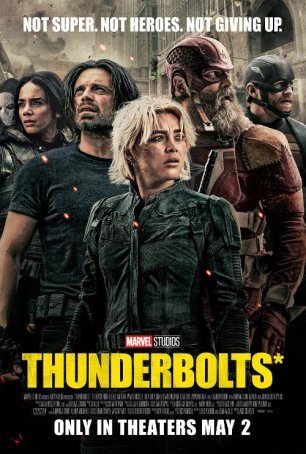
U.S. Release Date: 2025-05-02
MPAA Rating: "PG-13" (Violence, Profanity)
Genre: Action/Adventure
Director: Jake Schreier
Cast: Florence Pugh, Sebastian Stan, Julia Louis-Dreyfus, Lewis Pullman, David Harbour, Wyatt Russell, Hannah John-Kamen, Geraldine Viswanathan
Bringing together the flotsam and jetsam of the MCU imparts the “back to basics” feel of Thunderbolts* with a welcome sense of freshness.

U.S. Release Date: 2025-05-02
MPAA Rating: "R" (Violence, Profanity, Sexual Content, Nudity)
Genre: Comedy/Thriller
Director: Paul Feig
Cast: Anna Kendrick, Blake Lively, Henry Golding, ...
With the actors and director Paul Feig on board, the only thing no one bothered with was a good screenplay.

U.S. Release Date: 2025-04-25
MPAA Rating: "R" (Violence, Gore, Profanity)
Genre: Horror
Director: David F. Sandberg
Cast: Ella Rubin, Michael Cimino, Odessa A’zion, ...
Like far too many game-to-film adaptations, the better option is to fire up the PS5 and stay far, far away from the multiplex.
Latest ReelThoughts
- Jan 3rd 2025 | Rewinding 2024 - The Year in Film
- Jan 3rd 2024 | Rewinding 2023 - The Year in Film
- Jan 4th 2023 | Rewinding 2022 - The Year in Review (Including Top 10 List)
- Dec 31st 2021 | Rewinding 2021: The Year in Film (Including the Top 10)
- Jan 16th 2021 | Rewinding 2020: The Year in Movies (The Top 10)
- Feb 2nd 2020 | Berardinelli's Ballot: The 2020 Oscars
- Dec 31st 2019 | Rewinding 2019: The Year in Review
Latest VideoViews
-
 May 1st 2025 | Kill Bill
- Apr 7th 2025 | Tommy Boy
- Mar 6th 2025 | Dazed and Confused
- Feb 10th 2025 | Beyond Utopia
- Jan 30th 2025 | Jackie Brown
- Jan 16th 2025 | Karate Kid, The
- Nov 20th 2024 | Strangeland


U.S. Release Date: 2025-04-25
MPAA Rating: "R" (Violence, Profanity)
Genre: Thriller
Director: Gavin O'Connor
Cast: Ben Affleck, Jon Bernthal, Cynthia Addai-Robinson, Daniella Pineda, J.K. Simmons, Robert Morgan, Grant Harvey
The movie works when focused on character interaction and buddy-movie tropes, but the action elements are perfunctory at best and boring at worst.

U.S. Release Date: 2025-04-18
MPAA Rating: "R" (Violence, Gore, Profanity, Sexual Content)
Genre: Horror
Director: Ryan Coogler
Cast: Michael B. Jordan, Li Jun Li, Delroy Lindo, Omar Benson Miller, Jayme Lawson, Wunmi Mosaku, Jack O’Connell, Miles Caton, Hailee Steinfeld, Yao
Warts and all, "Sinners" is a wholly original motion picture full of bravura moments, strong performances, and horror-appropriate gore and violence.
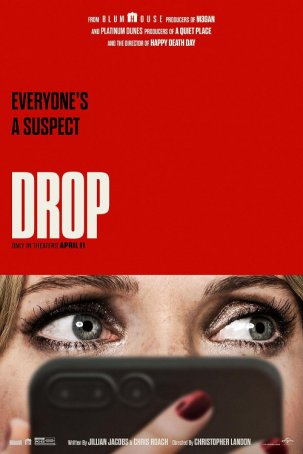
U.S. Release Date: 2025-04-11
MPAA Rating: "PG-13" (Violence, Profanity)
Genre: Thriller
Director: Christopher Landon
Cast: Meghann Fahy, Brandon Sklenar, Violett Beane, Jacob Robinson, Reed Diamond
Starts out with Hitchcockian flair and rides a dizzying wave of anxiety-based mystery until, like far too many underwritten thrillers, it falls apart.

U.S. Release Date: 2025-04-11
MPAA Rating: "PG-13" (Violence, Profanity)
Genre: Thriller
Director: James Hawes
Cast: Rami Malek, Marc Rissmann, Michael Stuhlberg, Jon Bernthal, Caitriona Balfe, Laurence Fishburne, Rachel Brosnahan, Julianne Nicholson, Holt McCallany, Joseph Millson
Essentially Jason Bourne on Vicodin with a little Death Wish sprinkled on top.
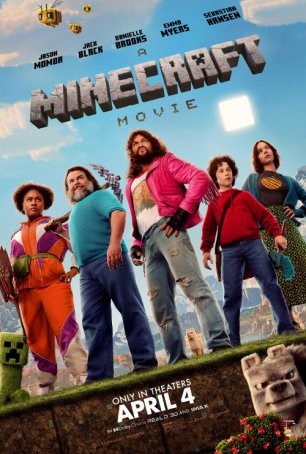
U.S. Release Date: 2025-04-04
MPAA Rating: "PG"
Genre: Fantasy/Action
Director: Jared Hess
Cast: Jason Momoa, Jack Black, Emma Myers, Danielle Brooks, Sebastian Hansen, Jennifer Coolidge, Rachel House
Never finds its groove, constantly veering from one set-piece to another with a scattershot storyline and whiplash-inducing tone inconsistencies.

U.S. Release Date: 2025-03-28
MPAA Rating: "R" (Violence, Profanity)
Genre: Action/Thriller
Director: David Ayer
Cast: Jason Statham, Jason Flemyng, Arianna Rivas, Emmett J. Scanlan, Eve Mauro, Maximillian Osinski, Andrej Kaminsky, Chidi Ajufo, David Harbour, Michael Pena
For anyone whose primary concern is to see the righteous slaughter of bad guys at the hands of the noble Statham, "A Working Man" does not disappoint.
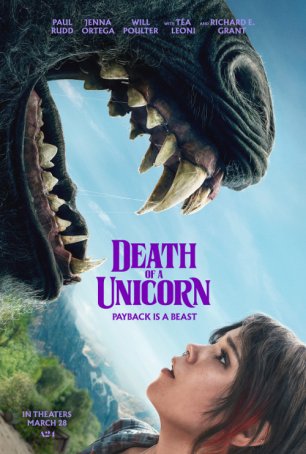
U.S. Release Date: 2025-03-28
MPAA Rating: "R" (Violence, Gore, Profanity)
Genre: Horror/Comedy
Director: Alex Scharfman
Cast: Paul Rudd, Jenna Ortega, Richard E. Grant, Will Poulter, Tea Leoni, Anthony Carrigan, Jessica Hynes, Sunita Mani, Steve Park
This one is definitely not for pre-teen girls.