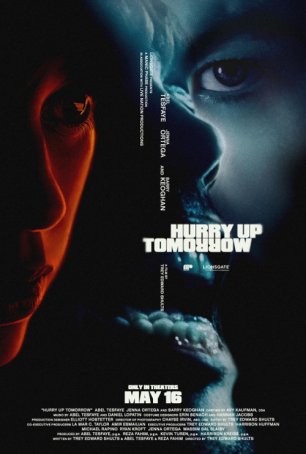
U.S. Release Date: 2025-05-16
MPAA Rating: "R" (Profanity, Violence, Drugs)
Genre: Thriller
Director: Trey Edward Shults
Cast: Abel Tesfaye, Jenna Ortega, Barry Keoghan
"Hurry Up Tomorrow" seems destined for one of two fates: to be buried in the landfill of self-indulgent, ill-advised vanity projects or find a second life as a cult classic.

U.S. Release Date: 2025-05-09
MPAA Rating: "R" (Violence, Gore, Profanity)
Genre: Action/Thriller
Director: James Madigan
Cast: Josh Hartnett, Charithra Chandran, Julian Kostov, ...
There are a few standout moments but there are also a few too many scenes when the movie goes on auto-pilot as if it is reluctant to get really crazy.

U.S. Release Date: 2025-05-02
MPAA Rating: "R" (Violence, Profanity, Sexual Content, Nudity)
Genre: Comedy/Thriller
Director: Paul Feig
Cast: Anna Kendrick, Blake Lively, Henry Golding, ...
With the actors and director Paul Feig on board, the only thing no one bothered with was a good screenplay.
Latest ReelThoughts
- Jan 3rd 2025 | Rewinding 2024 - The Year in Film
- Jan 3rd 2024 | Rewinding 2023 - The Year in Film
- Jan 4th 2023 | Rewinding 2022 - The Year in Review (Including Top 10 List)
- Dec 31st 2021 | Rewinding 2021: The Year in Film (Including the Top 10)
- Jan 16th 2021 | Rewinding 2020: The Year in Movies (The Top 10)
- Feb 2nd 2020 | Berardinelli's Ballot: The 2020 Oscars
- Dec 31st 2019 | Rewinding 2019: The Year in Review
Latest VideoViews
-
 May 12th 2025 | Something Wicked This Way Comes
- May 1st 2025 | Kill Bill
- Apr 7th 2025 | Tommy Boy
- Mar 6th 2025 | Dazed and Confused
- Feb 10th 2025 | Beyond Utopia
- Jan 30th 2025 | Jackie Brown
- Jan 16th 2025 | Karate Kid, The

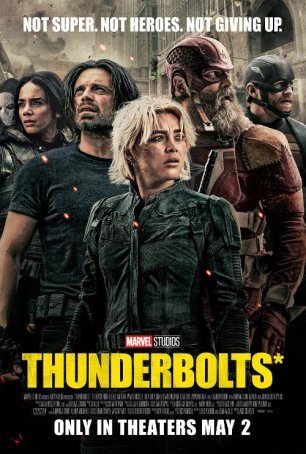
U.S. Release Date: 2025-05-02
MPAA Rating: "PG-13" (Violence, Profanity)
Genre: Action/Adventure
Director: Jake Schreier
Cast: Florence Pugh, Sebastian Stan, Julia Louis-Dreyfus, Lewis Pullman, David Harbour, Wyatt Russell, Hannah John-Kamen, Geraldine Viswanathan
Bringing together the flotsam and jetsam of the MCU imparts the “back to basics” feel of Thunderbolts* with a welcome sense of freshness.

U.S. Release Date: 2025-04-25
MPAA Rating: "R" (Violence, Gore, Profanity)
Genre: Horror
Director: David F. Sandberg
Cast: Ella Rubin, Michael Cimino, Odessa A’zion, Ji-young Yoo, Belmont Cameli, Maia Mitchell, Peter Stormare
Like far too many game-to-film adaptations, the better option is to fire up the PS5 and stay far, far away from the multiplex.

U.S. Release Date: 2025-04-25
MPAA Rating: "R" (Violence, Profanity)
Genre: Thriller
Director: Gavin O'Connor
Cast: Ben Affleck, Jon Bernthal, Cynthia Addai-Robinson, Daniella Pineda, J.K. Simmons, Robert Morgan, Grant Harvey
The movie works when focused on character interaction and buddy-movie tropes, but the action elements are perfunctory at best and boring at worst.

U.S. Release Date: 2025-04-18
MPAA Rating: "R" (Violence, Gore, Profanity, Sexual Content)
Genre: Horror
Director: Ryan Coogler
Cast: Michael B. Jordan, Li Jun Li, Delroy Lindo, Omar Benson Miller, Jayme Lawson, Wunmi Mosaku, Jack O’Connell, Miles Caton, Hailee Steinfeld, Yao
Warts and all, "Sinners" is a wholly original motion picture full of bravura moments, strong performances, and horror-appropriate gore and violence.
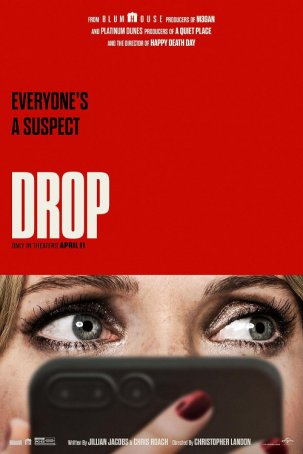
U.S. Release Date: 2025-04-11
MPAA Rating: "PG-13" (Violence, Profanity)
Genre: Thriller
Director: Christopher Landon
Cast: Meghann Fahy, Brandon Sklenar, Violett Beane, Jacob Robinson, Reed Diamond
Starts out with Hitchcockian flair and rides a dizzying wave of anxiety-based mystery until, like far too many underwritten thrillers, it falls apart.

U.S. Release Date: 2025-04-11
MPAA Rating: "PG-13" (Violence, Profanity)
Genre: Thriller
Director: James Hawes
Cast: Rami Malek, Marc Rissmann, Michael Stuhlberg, Jon Bernthal, Caitriona Balfe, Laurence Fishburne, Rachel Brosnahan, Julianne Nicholson, Holt McCallany, Joseph Millson
Essentially Jason Bourne on Vicodin with a little Death Wish sprinkled on top.
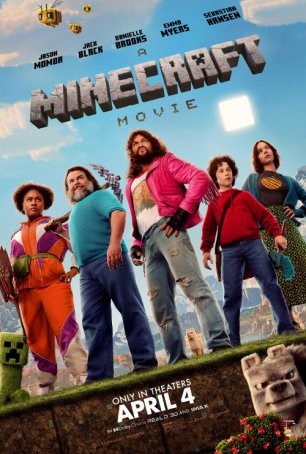
U.S. Release Date: 2025-04-04
MPAA Rating: "PG"
Genre: Fantasy/Action
Director: Jared Hess
Cast: Jason Momoa, Jack Black, Emma Myers, Danielle Brooks, Sebastian Hansen, Jennifer Coolidge, Rachel House
Never finds its groove, constantly veering from one set-piece to another with a scattershot storyline and whiplash-inducing tone inconsistencies.