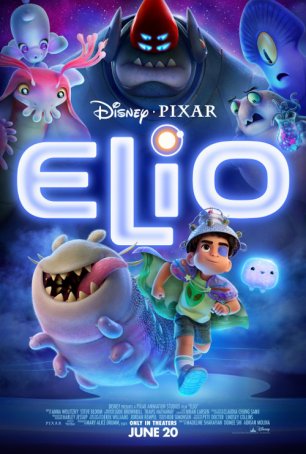
U.S. Release Date: 2025-06-20
MPAA Rating: "PG"
Genre: Animated/Science Fiction
Director: Domee Shi, Madeline Sharafian, Adrian Molina
Cast: Yonas Kibreab, Zoe Saldana, Remy Edgerly, Brandon Moon, Brad Garrett, Jameela Jamil
Long story short: this is a good film for kids, but maybe not so great for adults, and feels less like Pixar than the generic films being churned out by rival animation companies.
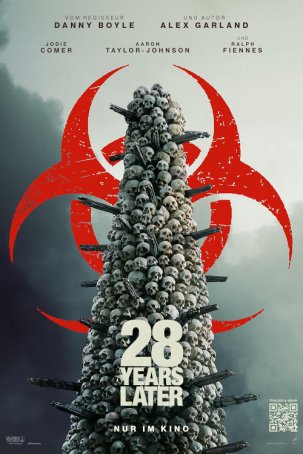
U.S. Release Date: 2025-06-20
MPAA Rating: "R" (Violence, Gore, Nudity)
Genre: Horror/Science Fiction
Director: Danny Boyle
Cast: Alfie Williams, Jodie Comer, Aaron-Taylor Johnson, ...
Only the unevenness of the proceedings and the lack of a clean ending keep this from greatness.

U.S. Release Date: 2025-06-13
MPAA Rating: "R" (Sexual Content, Profanity)
Genre: Romantic Comedy
Director: Celine Song
Cast: Dakota Johnson, Chris Evans, Pedro Pascal, ...
Weighed down by a flat performance from Dakota Johnson, the movie shifts into low-gear after an upbeat, promising first act.
Latest ReelThoughts
- Jan 3rd 2025 | Rewinding 2024 - The Year in Film
- Jan 3rd 2024 | Rewinding 2023 - The Year in Film
- Jan 4th 2023 | Rewinding 2022 - The Year in Review (Including Top 10 List)
- Dec 31st 2021 | Rewinding 2021: The Year in Film (Including the Top 10)
- Jan 16th 2021 | Rewinding 2020: The Year in Movies (The Top 10)
- Feb 2nd 2020 | Berardinelli's Ballot: The 2020 Oscars
- Dec 31st 2019 | Rewinding 2019: The Year in Review
Latest VideoViews
- May 12th 2025 | Something Wicked This Way Comes
- May 1st 2025 | Kill Bill
- Apr 7th 2025 | Tommy Boy
- Mar 6th 2025 | Dazed and Confused
- Feb 10th 2025 | Beyond Utopia
- Jan 30th 2025 | Jackie Brown
- Jan 16th 2025 | Karate Kid, The


U.S. Release Date: 2025-06-13
MPAA Rating: "R" (Profanity)
Genre: Drama
Director: Mike Flanagan
Cast: Tom Hiddleston, Chiwetel Ejiofor, Karen Gillan, Mark Hamill, Mia Sara, Annalise Basso, Taylor Gordon
There is something deeply human about this movie and what it says about how we approach life from its giddy, optimistic early days to its eventual decline.

U.S. Release Date: 2025-06-13
MPAA Rating: "PG" (Violence)
Genre: Fantasy/Adventure
Director: Dean DeBlois
Cast: Mason Thames, Nico Parker, Gerard Butler, Nick Frost
Represents solid family entertainment even if it feels like it is tracing over an existing pattern rather than developing something new.

U.S. Release Date: 2025-06-06
MPAA Rating: "PG-13" (Violence, Sexual Content, Nude Images)
Genre: Comedy
Director: Wes Anderson
Cast: Benicio Del Toro, Scarlett Johansson, Jeffrey Wright, Mathieu Amalric, Bryan Cranston, Tom Hanks, Riz Ahmed, Michael Cera, Mia Threapleton, Benedict Cumberbatch
Anderson has almost completely dispensed with a conventional storyline in service of a movie that delights in parodying seemingly anything and everything.

U.S. Release Date: 2025-06-06
MPAA Rating: "R" (Violence, Profanity)
Genre: Action/Thriller
Director: Len Wiseman
Cast: Ana de Armas, Keanu Reeves, Ian McShane, Anjelica Huston, Gabriel Byrne, Catalina Sandino Moreno, Noman Reedus, Lance Reddick, Victoria Comte
A standard-order revenge thriller – an okay action film with a lugubrious first half that perks up considerably past the one-hour mark.

U.S. Release Date: 2025-05-30
MPAA Rating: "R" (Sexual Content, Profanity, Nudity)
Genre: Romantic Comedy
Director: Laura Piani
Cast: Camille Rutherford, Pablo Pauly, Charlie Anson, Liz Crowther, Alan Fairbairn
The movie wants to be thoughtful and cultured but it ends up dispersing the delightful froth that makes the best movies of the genre so spirited.

U.S. Release Date: 2025-05-30
MPAA Rating: "PG-13" (Violence, Profanity)
Genre: Drama
Director: Jonathan Entwistle
Cast: Ben Wang, Jackie Chan, Ralph Macchio, Joshua Jackson, Sadie Stanley, Ming-Na Wen, Aramis Knight
The overstuffed 94-minute feature aggressively strip-mines the previous five films in an attempt to give Karate Kid lovers another dose of the universe they have come to love.

U.S. Release Date: 2025-05-30
MPAA Rating: "R" (Violence, Gore, Profanity, Nudity)
Genre: Horror
Director: Danny Philippou, Michael Philippou
Cast: Bill Barratt, Sally Hawkins, Sora Wong, Jonah Wren Phillips
A serious downer, with a nihilistic approach designed to infuse the viewer with a sense of growing unease without worrying about delivering a catharsis.