
U.S. Release Date: 2024-04-26
MPAA Rating: "R" (Profanity, Sexual Content, Nudity)
Genre: Drama
Director: Luca Guadagnino
Cast: Zendaya, Josh O’Connor, Mike Faist
This middling melodrama about power, sex, and tennis is heavy on homoeroticism and light on meaningful storytelling.

U.S. Release Date: 2024-04-26
MPAA Rating: "R" (Violence, Gore, Profanity)
Genre: Action/Comedy
Director: Moritz Mohr
Cast: Bill Skarsgard, Andrew Koji, Sharlto Copley, ...
When the warped humor and unallayed brutality are working hand-in-hand, this is a fun (if bizarre) experience.

U.S. Release Date: 2024-04-19
MPAA Rating: "R" (Violence, Gore, Profanity)
Genre: Horror
Director: Matt Dettinelli-Olpin, Tyler Gillett
Cast: Melissa Barrera, Dan Stevens, Alisha Weir, ...
For those willing to overlook some often-familiar horror movie conventions, the movie is gorily diverting and maintains a light, flippant tone.
Latest ReelThoughts
- Jan 3rd 2024 | Rewinding 2023 - The Year in Film
- Jan 4th 2023 | Rewinding 2022 - The Year in Review (Including Top 10 List)
- Dec 31st 2021 | Rewinding 2021: The Year in Film (Including the Top 10)
- Jan 16th 2021 | Rewinding 2020: The Year in Movies (The Top 10)
- Feb 2nd 2020 | Berardinelli's Ballot: The 2020 Oscars
- Dec 31st 2019 | Rewinding 2019: The Year in Review
- Dec 26th 2019 | A Look Back at the 2010s
Latest VideoViews
-
 Apr 25th 2024 | That's Entertainment
- Apr 11th 2024 | Batman Returns
- Mar 21st 2024 | Umberto D.
- Mar 13th 2024 | Return to Horror High
- Mar 8th 2024 | Quest for Fire
- Feb 29th 2024 | Burke and Hare
- Feb 19th 2024 | Terror in the Aisles


U.S. Release Date: 2024-04-19
MPAA Rating: "R" (Violence, Profanity)
Genre: Action/Thriller
Director: Guy Ritchie
Cast: Henry Cavill, Freddy Fox, Til Schweiger, Rory Kinnear, Henry Golding, Hero Fiennes Tiffin, Cary, Babs Olusanmokun, Eiza Gonzalez, Alex Pettyfer, Alan Ritchson, Danny Sapani
Like many recent Ritchie movies, this one has a lot of frenetic action, a fair amount of spectacle, some cheeky dialogue, and a hefty dose of machismo.

U.S. Release Date: 2024-04-12
MPAA Rating: "R" (Violence, Sexual Content, Prosthetic Nudity)
Genre: Adventure
Director: David Zeller, Nathan Zeller
Cast: Jesse Eisenberg, Riley Keough, Christophe Zajac-Denek, Nathan Zeller
Designed to be corny and loopy but with a kernel of sentimentality at its core, and is sufficiently different to make it almost worth seeing for that reason alone.

U.S. Release Date: 2024-04-12
MPAA Rating: "R" (Violence, Profanity)
Genre: Drama/Thriller
Director: Alex Garland
Cast: Kirsten Dunst, Wagener Moura, Stephen McKinley Henderson, Cailee Spaeny, Nick Offerman
"Civil War" does a good job dissecting the damage done by a desensitization to violence but it botches the backstory and features an ending that belongs in another movie.
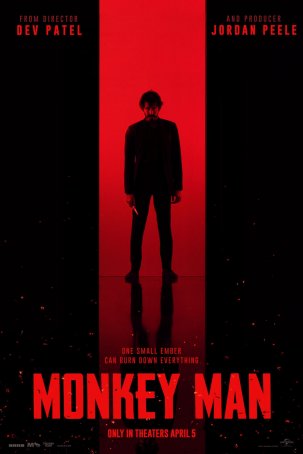
U.S. Release Date: 2024-04-05
MPAA Rating: "R" (Violence, Gore, Profanity, Sexual Content, Drugs)
Genre: Action/Thriller
Director: Dev Patel
Cast: Dev Patel, Sharlto Copley, Sikander Kher, Pitobash, Vipin Sharma, Adithi Kalkunte, Sobhita Dhulipala, Ashwini Kalsekar, Makarand Deshpande
A blood-soaked revenge tale with a high body count that refuses to pull its punches to make the protagonist more likable.

U.S. Release Date: 2024-04-05
MPAA Rating: "R" (Profanity, Brief Nudity, Sexual Content)
Genre: Comedy/Mystery
Director: Thea Sharrock
Cast: Jessie Buckley, Malachi Kirby, Anjana Vasan, Gemma Jones, Eileen Atkins, Hugh, Joanna Scanlan, Alisha Weir, Timothy Spall, Olivia Colman, Paul Chahidi
As a comedy, it hits many of the right notes but as a mystery, it is less than impressive.

U.S. Release Date: 2024-04-05
MPAA Rating: "PG-13" (Profanity, Sexual Content)
Genre: Fantasy/Romance
Director: Ned Benson
Cast: Lucy Boynton, David Corenswet, Justin H. Min
The actors do what they can with underwritten roles but it is hard not to see that a lot more could have been developed from the premise.

U.S. Release Date: 2024-03-29
MPAA Rating: "PG-13" (Violence)
Genre: Science Fiction/Action
Director: Adam Wingard
Cast: Rebecca Hall, Brian Tyree Henry, Dan Stevens, Kaylee Hottle, Alex Ferns
For those who have an orgasmic reaction to kaiju confrontations, far too little of the film is devoted to them and the overreliance on CGI leeches away the awe associated with the spectacle.