
U.S. Release Date: 2025-05-30
MPAA Rating: "PG-13" (Violence, Profanity)
Genre: Drama
Director: Jonathan Entwistle
Cast: Ben Wang, Jackie Chan, Ralph Macchio, Joshua Jackson, Sadie Stanley, Ming-Na Wen, Aramis Knight
The overstuffed 94-minute feature aggressively strip-mines the previous five films in an attempt to give Karate Kid lovers another dose of the universe they have come to love.

U.S. Release Date: 2025-05-30
MPAA Rating: "R" (Sexual Content, Profanity, Nudity)
Genre: Romantic Comedy
Director: Laura Piani
Cast: Camille Rutherford, Pablo Pauly, Charlie Anson, ...
The movie wants to be thoughtful and cultured but it ends up dispersing the delightful froth that makes the best movies of the genre so spirited.

U.S. Release Date: 2025-05-30
MPAA Rating: "R" (Violence, Gore, Profanity, Nudity)
Genre: Horror
Director: Danny Philippou, Michael Philippou
Cast: Bill Barratt, Sally Hawkins, Sora Wong, ...
A serious downer, with a nihilistic approach designed to infuse the viewer with a sense of growing unease without worrying about delivering a catharsis.
Latest ReelThoughts
- Jan 3rd 2025 | Rewinding 2024 - The Year in Film
- Jan 3rd 2024 | Rewinding 2023 - The Year in Film
- Jan 4th 2023 | Rewinding 2022 - The Year in Review (Including Top 10 List)
- Dec 31st 2021 | Rewinding 2021: The Year in Film (Including the Top 10)
- Jan 16th 2021 | Rewinding 2020: The Year in Movies (The Top 10)
- Feb 2nd 2020 | Berardinelli's Ballot: The 2020 Oscars
- Dec 31st 2019 | Rewinding 2019: The Year in Review
Latest VideoViews
- May 12th 2025 | Something Wicked This Way Comes
- May 1st 2025 | Kill Bill
- Apr 7th 2025 | Tommy Boy
- Mar 6th 2025 | Dazed and Confused
- Feb 10th 2025 | Beyond Utopia
- Jan 30th 2025 | Jackie Brown
- Jan 16th 2025 | Karate Kid, The


U.S. Release Date: 2025-05-23
MPAA Rating: "PG-13" (Violence)
Genre: Action/Adventure
Director: Guy Ritchie
Cast: John Krasinski, Natalie Portman, Eiza Gonzalez, Domhnall Gleeson, Arian Moayed, Laz Alonso, Carmen Ejogo, Stanley Tucci
Yet another original streaming “event” movie that rewards viewers for inattentiveness - the less attention one pays to this soulless retread of an action/adventure wannabe, the better it looks.

U.S. Release Date: 2025-05-23
MPAA Rating: "PG"
Genre: Science Fiction/Adventure
Director: Dean Fleischer Camp
Cast: Maia Kealoha, Chris Sanders, Sydney Elizabeth Agudong, Zach Galifianakis, Billy Magnussen, Courtney B. Vance, Hannah Waddingham, Kaipo Dudoit, Tia Carrera
There is nothing to disabuse notions that this is an effective bonding opportunity for parents and young children with a healthy side order of nostalgia.

U.S. Release Date: 2025-05-23
MPAA Rating: "PG-13" (Violence, Profanity)
Genre: Action/Thriller
Director: Christopher McQuarrie
Cast: Tom Cruise, Henry Czerny, Angela Basset, Esai Morales, Pom Klementieff, Greg Tarzan Davis, Ving Rhames, Simon Pegg, Hayley Atwell, Shea Whigham
A no-holds-barred action-oriented epic that does not much care if it makes sense as long as viewers are amped-up and engaged.
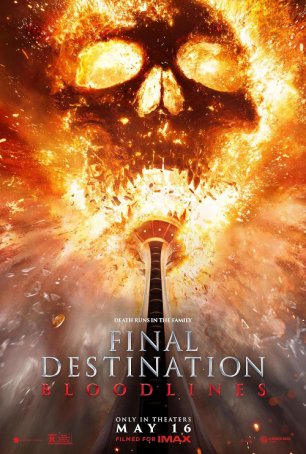
U.S. Release Date: 2025-05-16
MPAA Rating: "R" (Violence, Gore, Profanity)
Genre: Horror
Director: Zach Lipovsky, Adam Stein
Cast: Kaitlyn Santa Juana, Tony Todd, Tinpo Lee, Alex Zahara, Anna Lore, Owen Patrick Joyner, Richard Harmon, Rya Kihlstedt, Teo Briones, Brec Bassinger
In large part because of a great beginning and a solid ending, this is one of the better entries into the series.

U.S. Release Date: 2025-05-16
MPAA Rating: "R" (Profanity, Violence, Drugs)
Genre: Thriller
Director: Trey Edward Shults
Cast: Abel Tesfaye, Jenna Ortega, Barry Keoghan
"Hurry Up Tomorrow" seems destined for one of two fates: to be buried in the landfill of self-indulgent, ill-advised vanity projects or find a second life as a cult classic.

U.S. Release Date: 2025-05-09
MPAA Rating: "R" (Violence, Gore, Profanity)
Genre: Action/Thriller
Director: James Madigan
Cast: Josh Hartnett, Charithra Chandran, Julian Kostov, Katee Sackhoff
There are a few standout moments but there are also a few too many scenes when the movie goes on auto-pilot as if it is reluctant to get really crazy.

U.S. Release Date: 2025-05-02
MPAA Rating: "R" (Violence, Profanity, Sexual Content, Nudity)
Genre: Comedy/Thriller
Director: Paul Feig
Cast: Anna Kendrick, Blake Lively, Henry Golding, Allison Janney, Elizabeth Perkins, Michele Morrone, Elena Sofia Ricci
With the actors and director Paul Feig on board, the only thing no one bothered with was a good screenplay.